


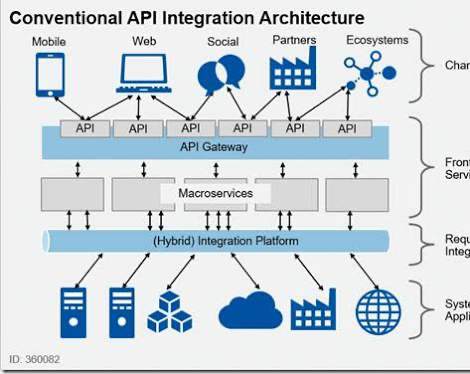
Marketing teams rarely work with one software platform anymore. A typical B2B company may use a CRM for customer relationships, an email platform for campaigns, an analytics tool for reporting, an advertising platform for acquisition, a customer data platform for audience management, and several other tools for content, automation, sales enablement, and customer support.
Each platform may be useful on its own. The problem starts when these systems operate independently.
A lead captured through a website may sit in one database while the sales team works from another. Marketing engagement data might remain inside an email platform, while advertising data lives somewhere else. Customer information can become duplicated, outdated, or difficult to access across departments.
This is where API integrations have become increasingly important.
Application programming interfaces, commonly known as APIs, allow different software applications to communicate with one another. Instead of forcing marketing teams to manually move information between platforms, APIs can create automated connections that allow data and actions to flow between systems.
For modern B2B organizations, this is becoming less about convenience and more about building a connected marketing infrastructure.
Why Modern Marketing Stacks Have Become So Fragmented
The growth of marketing technology has created enormous choice for businesses.
There are specialized platforms for almost every part of the customer journey. A company can select one tool for email marketing, another for paid advertising, another for lead scoring, another for website analytics, and another for customer engagement.
This specialization can be valuable. A dedicated platform may provide capabilities that would be difficult to build internally.
However, every additional platform introduces another source of customer and campaign data.
Consider a B2B software company running a paid campaign. A prospect clicks an advertisement, visits the website, downloads a report, receives an email, schedules a sales call, and eventually becomes a customer.
That journey may generate information across five or six different systems.
If those systems are disconnected, the company may struggle to understand what actually happened.
Marketing might see the original campaign interaction. Sales might see the opportunity in the CRM. The email team may see several campaign engagements. The analytics team may have website behavior data.
The customer, however, experienced only one journey.
API integrations help organizations bring those separate pieces together.
What an API Integration Actually Does
An API provides a structured way for one application to request information or perform an action in another application.
For example, when a visitor fills out a lead-generation form, an API integration could automatically send the submitted information to a CRM.
The workflow might look like this:
Website form → API → CRM → Marketing automation → Sales notification
The marketer does not have to download a spreadsheet and manually import the contact.
The same principle can work in the opposite direction.
Suppose a sales representative changes a prospect’s status to “qualified” in the CRM. That update could trigger another system to change the person’s marketing segment, adjust their email journey, or remove them from a particular advertising audience.
Instead of treating applications as isolated tools, the business creates a connected system.
Creating a Single Flow of Customer Data
One of the biggest benefits of API integrations is the ability to create more consistent data flows.
Without integration, customer information can become scattered across platforms. The same person might appear under slightly different names, have different job titles, or have outdated information depending on which system a team checks.
Connected systems reduce some of this fragmentation by allowing important updates to move automatically.
For example, when a customer’s company changes its account status in a CRM, that information can potentially be shared with marketing automation and customer success platforms.
This creates a more synchronized view of the customer.
It also reduces one of the most common problems in marketing operations: asking employees to maintain the same information in multiple systems.
Connecting Marketing and Sales
API integrations can be particularly valuable when marketing and sales depend on the same customer data.
Marketing teams often generate leads and measure engagement. Sales teams focus on conversations, opportunities, and revenue. When their systems are disconnected, both departments can end up working with incomplete information.
An integrated stack can connect these activities.
For instance, a marketing platform might record that a prospect attended a webinar, downloaded two resources, and opened several emails. An API can make selected engagement data available inside the CRM.
A salesperson can then see more context before contacting the prospect.
The process can work in reverse as well.
If sales marks an account as an active opportunity, that information can be passed back to marketing. Marketing can then adjust campaign messaging or exclude the account from generic acquisition campaigns.
The result is a more coordinated customer journey.
Automating Repetitive Marketing Operations
Another major advantage is automation.
Marketing operations teams spend a surprising amount of time performing repetitive tasks: exporting lists, importing contacts, updating spreadsheets, checking records, and moving information between systems.
APIs can automate many of these processes.
Imagine an organization that receives hundreds of leads every week. Instead of having an employee move those leads from a form system into a CRM, an integration can transfer the information automatically.
The same workflow could assign the lead to a sales representative, add it to an appropriate marketing segment, and trigger a confirmation email.
Automation does not eliminate the need for marketing operations professionals. It changes where their time is spent.
Instead of maintaining spreadsheets and fixing routine transfers, they can focus more heavily on data quality, campaign architecture, attribution, and strategic improvements.
Improving Marketing Personalization
Personalization depends heavily on access to relevant customer information.
A marketing platform may know what emails someone interacted with. A CRM may know their company size and sales stage. A product platform may know which features they use. A customer support system may contain information about recent issues.
Individually, each source provides only part of the picture.
APIs make it possible to connect those sources where appropriate.
For example, a B2B software company could use CRM information to identify enterprise accounts and then use that information to deliver different marketing experiences from those designed for smaller businesses.
Product usage data could also influence communication.
A customer who has recently started using a particular feature might receive educational content related to that feature. Someone who has not used an important capability might receive onboarding material instead.
The quality of personalization depends on the quality and relevance of the data being connected. Integration provides the infrastructure, while marketing teams still need to determine how that data should be used.
Strengthening Marketing Analytics
Marketing analytics is another area where disconnected systems create problems.
A company may have advertising data in one platform, website activity in another, CRM information somewhere else, and revenue data in a financial or sales system.
This makes it difficult to connect marketing activity to business outcomes.
API integrations can help move selected data into a centralized analytics environment or data warehouse.
A company could combine:
- Advertising spend
- Website traffic
- Lead activity
- CRM opportunities
- Customer acquisition
- Subscription revenue
- Customer retention
With these sources connected, marketers can move beyond surface-level metrics.
Instead of simply asking how many clicks a campaign generated, they can investigate what happened after those clicks.
Did the visitors become leads? Did qualified leads enter the sales pipeline? Did opportunities turn into customers? What revenue was eventually associated with those accounts?
This creates a more complete picture of marketing performance.
The Rise of Composable Marketing Stacks
API connectivity has also contributed to the rise of composable technology architectures.
Rather than purchasing one massive platform that attempts to handle every marketing function, organizations can combine specialized tools.
A business might use one system for customer relationship management, another for content management, another for analytics, and another for marketing automation.
APIs become the connective layer between these applications.
This approach can provide flexibility. Companies can replace individual components without necessarily rebuilding the entire marketing infrastructure.
However, composability also introduces responsibility.
The more tools an organization uses, the more important architecture, documentation, permissions, data standards, and monitoring become.
A collection of connected tools is not automatically a well-designed technology stack.
API Integrations and Real-Time Marketing
Speed matters in modern marketing.
A prospect’s behavior can change quickly. Someone who was researching a product yesterday may request a demo today. Someone who was actively evaluating a solution may become an existing customer tomorrow.
API integrations can allow important events to move between systems with much less delay than manual processes.
For example, a demo request can immediately create or update a CRM record and notify the appropriate sales team.
A purchase can trigger a customer onboarding workflow.
A subscription cancellation can update customer segments and stop promotional campaigns.
These real-time or near-real-time workflows can reduce delays between customer actions and business responses.
Webhooks Make Integrations More Responsive
Traditional API integrations often involve one system asking another system for information.
Webhooks provide another approach.
With a webhook, an application can send an event notification when something happens.
For example:
“A new customer was created.”
Another application can receive that event and immediately perform a related action.
This is particularly useful for event-driven marketing automation.
A form submission, subscription, purchase, account update, or campaign interaction can become the starting point for a larger workflow.
For businesses managing high volumes of customer activity, this can make their technology stack considerably more responsive.
The Importance of Data Governance
Connecting systems does not automatically solve data problems.
In fact, poor integration design can sometimes spread bad data faster.
Before connecting platforms, companies need clear rules about which system is responsible for specific information.
For example, the CRM might be the primary source for account ownership, while a billing platform remains the authoritative source for subscription status.
Without these rules, two systems may continuously overwrite each other’s information.
Data governance should therefore be part of the integration strategy.
Organizations should define:
- Which data should be shared
- Which system owns each field
- How often information should synchronize
- Who can access the data
- How errors are handled
- How long information should be retained
- What happens when an integration fails
This turns integration from a technical project into an operational capability.
Security Cannot Be an Afterthought
Marketing systems often contain sensitive business and customer information.
API connections therefore need to be designed with security in mind.
Authentication methods should be appropriate for the application, and API credentials should be protected rather than embedded carelessly in code or shared between employees.
Organizations should also use appropriate access controls.
An integration should receive only the permissions it actually needs.
If an application only needs to read customer segments, there may be no reason to give it permission to delete records.
Logging and monitoring can also help teams identify unusual activity, failed requests, or unexpected data transfers.
As marketing stacks become more connected, the security of each integration becomes part of the security of the broader ecosystem.
Managing Integration Failures
No integration is perfect.
APIs can experience outages. Authentication credentials can expire. Data formats can change. A platform may modify an endpoint or introduce a new version.
For this reason, businesses need to design for failure.
Important integrations should have monitoring and alerting so teams know when data stops moving.
Error handling is equally important.
If an API request fails, the system should ideally know whether to retry it, queue it for later, or alert an administrator.
Without these safeguards, a quiet integration failure could remain unnoticed while marketing and sales teams continue making decisions using incomplete data.
The Role of Integration Platforms
Not every company needs to build every API connection from scratch.
Integration platforms can simplify the process by providing pre-built connectors and workflow tools.
This allows marketing and operations teams to connect common applications with less custom development.
For example, a business might create a workflow where a new CRM contact triggers an action in an email platform and updates an internal reporting system.
For more complex organizations, custom integrations may still be necessary, particularly when dealing with proprietary systems, large data volumes, or highly specific business logic.
The right approach depends on the company’s architecture, technical resources, security requirements, and operational complexity.
APIs Are Becoming the Infrastructure Behind Modern Marketing
The most important change is not simply that marketers have more integrations available.
It is that marketing technology is increasingly being designed around connected systems.
Customers do not experience a company’s CRM, email platform, advertising account, analytics dashboard, and support software as separate products. They experience one brand.
That makes technology coordination increasingly important.
A fragmented stack can still contain excellent individual tools, but disconnected tools create friction. API integrations provide a mechanism for reducing that friction by allowing systems to exchange information and trigger actions.
The goal is not to connect everything to everything.
The goal is to create meaningful connections around the customer journey and the information the business actually needs.
Building a More Unified Marketing Stack
Companies looking to improve their marketing infrastructure can start with a relatively simple exercise.
First, map the major systems currently used by marketing, sales, customer success, finance, and product teams.
Next, identify where important information is duplicated or manually transferred.
Then determine which workflows create the most operational friction.
A company may discover that its biggest issue is not advertising data at all. It might be the delay between a lead submitting a form and reaching a salesperson. Another organization may find that its reporting system lacks reliable revenue data.
Those problems should guide integration priorities.
Start with high-value workflows rather than attempting to connect every application simultaneously.
As the architecture matures, establish standards for authentication, data ownership, naming conventions, monitoring, documentation, and error handling.
Final Thoughts
API integrations are helping businesses turn collections of marketing applications into more connected technology ecosystems.
They can reduce manual data entry, improve coordination between marketing and sales, support more relevant personalization, strengthen analytics, and enable faster automated workflows.
But APIs are not a magic solution for fragmented technology.
The strongest results come when integrations are supported by clear data governance, sensible architecture, security controls, and well-defined business processes.
For B2B companies, the future of marketing technology is unlikely to be defined by a single platform doing everything. Instead, organizations are increasingly building flexible stacks in which specialized applications work together.
APIs provide much of the connective infrastructure that makes this possible.
When those connections are designed around real business needs, the marketing stack becomes more than a collection of tools. It becomes a coordinated system capable of moving information, responding to customer activity, and giving teams a clearer view of the entire customer journey.